





.svg)

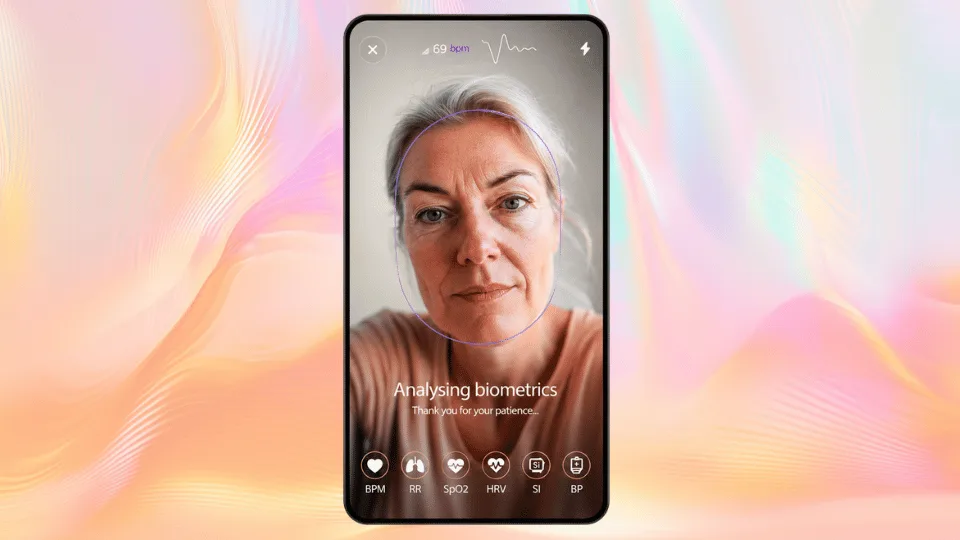


Your phone camera can pick up more than a smile. It can also detect tiny changes in the light reflected from your skin as blood moves with each heartbeat. This method is called remote photoplethysmography, or rPPG.
The changes are too small for you to see. Software studies the video signal and uses it to estimate measures such as heart rate. Some systems can also estimate breathing rate, heart rate variability and other health measures.
That sounds impressive, but the most useful way to think about a face scan is simple: it is a quick health-awareness tool. It is not a medical diagnosis.
What the research shows
Research on camera-based measurement is growing. A systematic review of clinical studies included 12 studies and 654 adults. Heart rate was the most studied measure. In the four studies that could be combined, camera estimates were close to electrocardiogram readings on average.
There are important limits. Most research has taken place in laboratories, clinics or healthy groups. Evidence is thinner for measures other than heart rate and for everyday use across large, varied populations. A broader review of camera monitoring also found gaps in real-world testing and in the accuracy of blood pressure and oxygen estimates.
This is why a scan result should raise awareness, not settle a medical question.
How to get a cleaner scan
rPPG works with light, so the conditions matter. For a better reading:
• sit somewhere with steady, even light on your face
• avoid strong backlight, deep shadows or rapidly changing light
• hold the phone steady at about eye level
• keep your face in the guide on the screen
• stay still and avoid talking during the scan
• wait until you are calm if you have just exercised or rushed up stairs
Movement, lighting, camera quality and differences in how light reflects from skin can all affect the signal. If the result seems surprising, repeat the scan under better conditions rather than treating the first number as fact.
Use the result as a prompt
A single reading is a snapshot. Heart rate can change with exercise, stress, caffeine, heat, illness, medicine and many other factors. That does not make the result useless. It means context matters.
Ask simple questions:
• Does the number make sense for what I was doing just before the scan?
• Is it similar when I repeat the scan while rested?
• Have I noticed a pattern over time?
• Do I have symptoms that need proper medical attention?
The scan can prompt you to pause, notice a trend or decide to check a measure with a validated device. It should not be used to diagnose a condition, change prescribed treatment or manage a disease on its own.
If you feel unwell, have chest pain, severe shortness of breath, fainting or another urgent symptom, seek medical help. Do not wait for a face scan or let a normal-looking result overrule how you feel.
How to find the feature
From the app dashboard, tap the + button and then select Perform health check. Follow the on-screen guide and allow camera access when asked.
The right role for a face scan
The value of rPPG is convenience. It can make it easier to check in with your body and build awareness of everyday patterns. Its limit is that an estimate from a short video is not the same as a full clinical assessment.
Use it with curiosity, not certainty. A useful health check starts a better question. It does not pretend to be the final answer.
Similar articles
Get updates from us
.svg)


